Dinesh Singh

Dinesh Singh
Subscribe For Updates!

Showing posts with label Real Estate News. Show all posts

Saturday, 26 April 2014

Gurgaon,the millennium city of Haryana


KINGDOM OF DREAMS 

Todays Gurgaon is synonymous with development and the new Gurgaon Master Plan 2021 will give a boost to its makeover from a developing city into a fully developed one.SHRI RAM SHAW writes 


Gurgaon,the millennium city of Haryana,was earlier thought of as a sleepy town on the suburbs of the national capital Delhi.That was a long time ago - and times,they have changed! 
Today's Gurgaon is synonymous with development.Gurgaon is a bustling metropolis and is a preferred choice for IT,ITeS,automotive and other infrastructure majors looking to set up shop in the Delhi NCR.Some like GE,Coca Cola,Pepsi,New York Life,Baxter,Wipro and Nestle are already there while several more are vying to come in.
Located on the National Highway 8,which connects the political capital Delhi to the financial capital Mumbai (also touching Jaipur,Gandhinagar,Ahmedabad,Vadodara and Surat),it can expect to attract greater investment in its economic growth and infrastructure expansion.
The IGI airport is closer to Gurgaon than Delhi and this is an added leverage for this megapolis to lure NRIs and MNCs.Gurgaon is fast transforming into a hi-tech city,accounting for a substantial portion of the nation's investments and profits,both in the public and the private sector.
The new Gurgaon Master Plan 2021 will give a boost to its makeover from a developing city to a fully developed one.The eight-lane toll expressway between Gurgaon and Delhi,which became operational in April 2007,will give Gurgaon rapid connectivity to all major places in the NCR including IGI airport and Dhaula Kuan in Delhi,over a distance of 28 kilometers that include seven flyovers and five underpasses along the stretch.
The quality of life in the privately owned estates in Gurgaon is something that is attracting the rich and the upper middle-class people to the megapolis's housing options.Offering an enticing array of facilities,the people of Gurgaon enjoy an exclusive lifestyle with very little hassles that other metros throw up.Assured urban and civic infrastructure like 24x7 water supply,electricity,security,common-area maintenance and sanitation are a norm here than an exception.The road layout in Gurgaon is also improving;it comparable to the infrastructure in other big and influential cities of the country.
With initiatives of the Haryana government,Gurgaon is likely to become a major hub of special economic zones (SEZs).A big-size SEZ of 3,000 acres,at a cost of Rs 2,060 crore,near Garhi Harsaru in Gurgaon district,has been sanctioned in principle by the government.About 2,400 units are slated to come up in the zone,holding out employment prospects for over 60,000 workers and exports of around Rs 42,000 crore.The Haryana Urban Development Authority (HUDA) and Gurgaon administration have fastened their seat belts to take Gurgaon social infrastructure to new heights.From food parks to housing complexes and SEZ to express highways,this cyber city of Haryana is the true reflection of a modern India on the fast track.
Gurgaon real estate market has gained prominence due to the booming IT/ITeS sectors.Of late,there has been a spurt in demand for Gurgaon's commercial and residential properties.The market is flooded with realty companies.A range of firms and services,from construction to architects and real estate agents,thrive in the city.
Some prominent real estate companies in Gurgaon DLF Group: DLF laid the first stone in the Gurgaon's development saga.The vast barren land of the sleepy town of Haryana is now converted into a major business and residential hub due to the initiative of this group.In business for the last six decades,DLF is currently focussing on strengthening its lateral and vertical business drivers.
Aspire Realtors: Aspire Realtors comprises a group of highly competent real estate agents.Aspire has over 12 years of experience in working with top developers of Gurgaon.Presently,it deals with top-notch builders like DLF,Ansal,Unitech,among others.The group specializes in DLF Phase II.A separate team of Aspire Realtors also works for the HUDA sectors.
Vatika: Vatika Group has successfully created an impressive portfolio of commercial and residential projects in the last 15 years.The projects developed by Vatika touch every walk of life and human enterprise.
BE Properties: BE Properties endeavors to offer technically sound and practically grounded services.It deals with properties ranging from residential to commercial and houses to office spaces.ARN Properties: ARN Properties is considered to be premium real estate agents in Gurgaon.The dealer focuses on relocation services,property investments,purchasing of property and offers consultancy services.
The HUDA plans to spend Rs 500 crore this calendar year for the development of Gurgaon.The projects that are a part of this infrastructural development process are a water management system,as well as the Delhi Metro extension to Gurgaon.
Nearly Rs 297 crore out of the total outlay of Rs 500 crore was earmarked for extension of the Metro route to Gurgaon.The Central Secretariat-Qutub Minar Metro corridor links Gurgaon to the CBD of Delhi,and runs all the way to the northeastern border of the capital.
The 12.5km stretch (South to Central) will be an important link in Line II of the Delhi Metro and the total distance from Jahangirpuri to Gurgaon is 45km.
Gurgaon does not yet have a storm-water disposal system and work has already begun on this project;this will go a long way in managing water in Gurgaon.The Rs 500-crore-budget will also be spent on solid-waste management plants,re-carpeting of roads and shifting of the garbage dumps.The whole purpose of making improvements to the infrastructure of Gurgaon is it cut down on pollution and allow the city to breathe easily.
The multiple towers of DLF Ltd's Magnolias housing project in Gurgaon will be completed in about a year's time;there are 589 premium apartments in the project.The country's largest developer by market value launched the project in 2005."The project was to be finished by 2008 but now the new deadline is mid-2011.As with several other ventures during the realty boom,the project was kicked off with an overseas partner,UK-based construction firm Laing O'Rourke (LOR),through a joint venture.But LOR exited its India business last year and the project got delayed.Construction is on now,"said Rajeev Talwar,executive director of DLF.Project delays continue to dog home buyers even as builders bet big on the residential segment to steer them to recovery after the bust of 2008.
In the Delhi NCR region,several new sectors have been opened up for development in Gurgaon under the 2021 Master Plan,where property rates are 30-40 % lower than those in existing sectors.By May 2011,people will be able to zoom past on the four-lane 24.3km Gurgaon-Faridabad road.The work on the widening of the Gurgaon-Faridabad road from the existing two lanes to four lanes has already begun.Designed to be a tolled road,Reliance Infrastructure has bagged this BOT (build,operate and transfer) project of four laning of the highway,along with the widening and strengthening of Ballabhgarh-Sohna road with a concession period of 17 years at Rs 780 crore.
It was the first of its kind road project on BOT basis undertaken by the Public Works (Building and Roads) Department of the Haryana government.For improvement or upgradation,both bituminous and concrete pavements would be provided.In addition,some links of the roads like MCF road,Crusher Zone road and Pali Bakhri road will be improved as a part of the project.The total length of roads covered under the project would be 66km.Even though it would be a toll road,certain categories of vehicles would be exempted from payment of toll.These vehicles include two wheelers,tractor trolleys carrying agricultural produce,defence vehicles,ambulances and funeral vans,police vehicles,fire-fighting vehicles,etc.
A Bollywood theme park was opened in Gurgaon recently.It is the first live entertainment complex on the scale of Disneyland (but minus the rides) to open in the country.The park's owners are aiming to offer a taste of the whole of India in one place,cashing in on the interest,both at home and abroad,in the Bollywood phenomena.A well-orchestrated Indian experience,that's what 'Kingdom of Dreams' is all about.Spread over nine acres,it seems too grand and opulent to be real - almost like the makeshift set of a film like "Devdas",waiting to be brought down after the shoot - except it's here to stay! Simply put,it is a live entertainment and leisure destination.
The Kingdom just opened the Culture Gully (which boasts of a sky dome) with six restaurants,six show kitchens,three street bars and seven retail stores,representing 14 states of India,through their architectural grandeur.There's plenty to do here - you may feast on a Rajasthani thali,sample the Bengali fare or sip south Indian filter coffee.Or,maybe,ease stress with a dry massage,or consult a tarot card reader,an astrologer or a palmist at the mystic centre! You could even shop at Mumbai's fashion street or just sit and watch local artisans and folk artists perform.
And,in the months to come,the Kingdom will have more to offer.The Nautanki Mahal will open soon.The 4D entertainment will be yours to experience - the price ranges between Rs 1,000 and Rs 6,000,though! And,Showshaa Theatre debuts in September.It will be drama and circus showcasing Indian epics and mythology,mock Indian weddings and talent shows.And soon,you can even unwind at the IIFA Buzz Cafe (a Bollywood lounge).Quite a lot lined up! 

Source :  - Times Of India

Wednesday, 16 April 2014

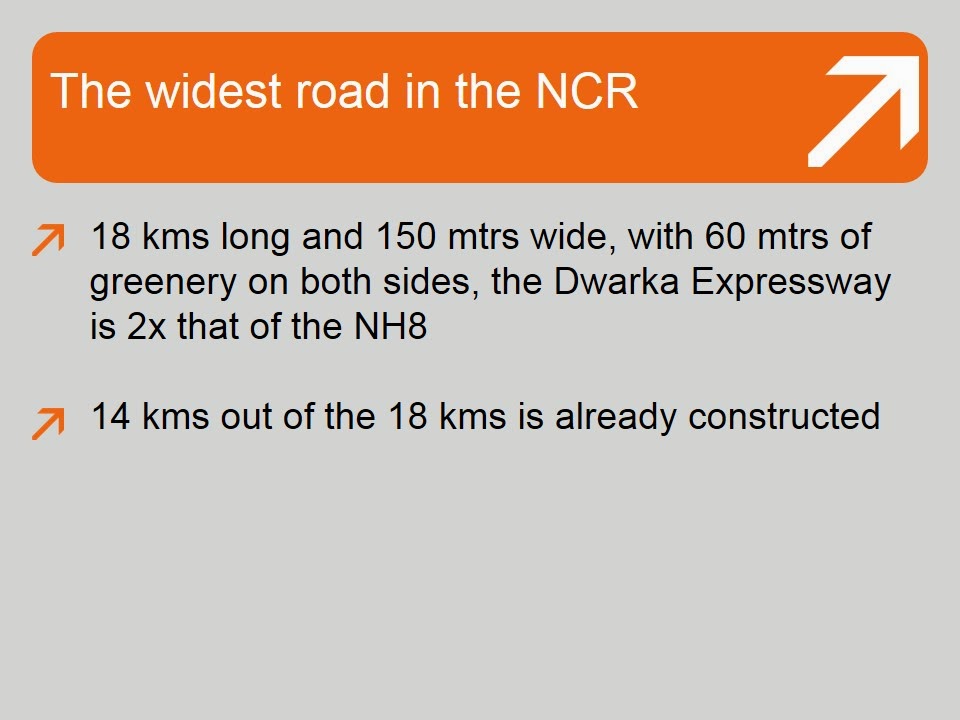
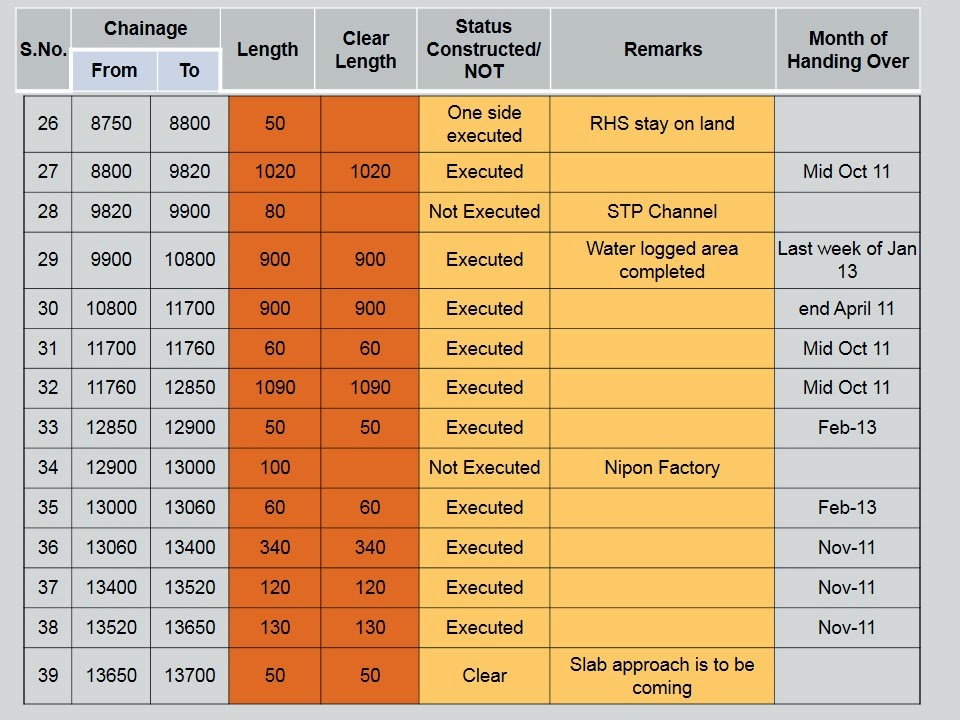
Dwarka Expressway - The Golden Road, Gurgaon

Dwarka Expressway - The Golden Road


Wednesday, 9 April 2014

Why you should not pursue your dream home


When you look at the hoardings and advertisements put up by real estate developers, the phrase 'dream home' is almost always part of the promotion. And since we all dream of owning our home one day, this is definitely a useful psychological hook to use in property promotion. But what really constitutes your dream home? Let us examine this in some depth. 

Home ownership is not a desire we suddenly wake up with one morning - as Indians, it is practically something we grow up with. It is the highest ideal of the Indian way of life to own a home, so we dream about ours from very early on. Usually, this 'dream home' is larger than life, beautifully decorated, in an impeccably planned neighborhood and the envy of our friends and relatives. 

With the passage of time, our dream home tends to become a little more realistic. For example, most of us have to accept that a bungalow in the classiest part of the city may not be within our means. In other words, the mental imagery of a mansion surrounded by lush lawns and trees lining the compound fade, to be replaced by a spacious, ultra-modern flat. 

By the time we have launched our career and managed to save enough money for a down payment, even this picture will have moderated in accordance with new realities such as actual spending power. 

Nevertheless, the original blueprint of our dream home tends to linger - and this is where many aspiring home buyers make serious mistakes during the home selection process. The maximum mistakes in this respect are committed on the resale. The ideal home for you should not be as close a match of your dream picture of it, regardless of how tempered it has become by reality. For instance, you should not have to pay for the expensive interior decor and German modular kitchen that the previous owner has put in. Nor should you have to pay for two parking spaces when you have no intention of ever owning more than one car. 

In actual fact, the factors on which you should buy a home must be: 

Price: Can you afford it, are you getting what you paid for according to the prevailing property market rates, and have you factored in all the hidden and future costs? 

Size: Is the home large enough for you now as well as your future needs?     

Locality: Is it safe for your, does it have the right conveniences within reach and can you feasibly travel to and from your place of work from there every day? 

Investment value: Will it appreciate sufficiently to enable you to sell it at some point in the future and move to another home? Is the building new enough to prevent investment erosion due to age-related depreciation of the building? 

All these factors are most readily visible when you buy a new property rather than a resale one. Properties in new projects being sold by reputed developers provide you with a WYSIWYG (What You See Is What You Get) opportunity. While it may not be anywhere close to your original 'dream home', it is a fresh, blank canvas with sufficient potential to paint a realistic, real-time dream on. 

By the same coin, many properties on the resale market are pictures drawn on the canvas of other people's dreams. Often, you have to pay for things you don't really want and inherit structural or design aspects that you cannot refashion to match your own vision.


Thursday, 3 April 2014

Work on 16-lane expressway to resume,Gurgaon


GURGAON: Legal hurdles coming in the way of the under-construction 16-lane expressway from the Delhi-Gurgaon border to Sector 55-56 seems to have been resolved with the National Green Tribunal (NGT) giving its approval to resume the construction work.

The residents of the National Media Centre had approached NGT asking it to halt construction work, alleging that DLF and HUDA were encroaching on the green belt that belonged to them.

In a fresh hearing on Tuesday, an NGT bench headed by Jyothimani said the road widening project does not unduly affect the residents of the nearby areas. It also said that it has to be respectfully accepted as a proposition of law that individual interest or, for that matter, smaller public interest must yield to the larger one.

The upgrade of HUDA sector road is being jointly carried out by the authority and DLF. The 16-lane expressway is an 8.3-km signal-free corridor connecting NH-8 to Golf Course Road.

According to the NGT order, the road was being constructed to enhance traffic flow, subject to environmental safeguards. According to the provisions of the Forest Conservation Act, 1980, the project road does not fall in the forest reserve area as informed to the Supreme Court by the state government.

The order also stated that efforts are also being made to transplant trees if it is feasible and to plant at least 10 trees for every tree cut. As per the revised plan only 26 trees will be required to be cut near the NMC on the land which belongs to the government. No tree on the land belonging to the NMC will be cut.

According to DLF, it has already planted 11,000 saplings and approximately 165 trees have been re-transplanted. "We are focused towards maintaining a balance between the environment and development while executing the project. This project will provide an optimum solution for smooth traffic movement, reducing traffic congestion and bottlenecks in Gurgaon. The widening of the road will also contain the ambient noise," said a DLF official.

Source :  -  http://timesofindia.indiatimes.com/city/gurgaon/Work-on-16-lane-expressway-to-resume/articleshow/33148404.cms

Wednesday, 26 March 2014

Joint home loan? Risks and rewards


Joint home loan? Risks and rewards
Are you planning to take a home loan? Would you like to enjoy additional benefits from it? Here's the answer for you - a joint home loan. There are various benefits that joint home loans offer you. You can now apply for joint home loans instantly. A joint home loan is nothing but simply adding a co-applicant or co-borrower in your home loan application. Let's explore some interesting facts about join home loans.
Who can be a co-applicant?
A co-applicant or co-borrower is your partner along with whom you are applying for home loan. Partner for home loan can be parents, spouse or siblings. Be careful of mixing the words co-owner and co-applicant/borrower. A co-owner is someone who has share in the property. Few banks insist that co-owners should also be co-applicants; however, the reverse is not true.
What documents are needed?
The documents needed for joint home loans are the same as any other home loan. The only difference is that here documents are needed from both applicant and co-applicant. General home loan documents needed are identity proof, address proof, salary slips and bank statements.
How about loan eligibility?
A common question asked by many people is - 'Will the home loan eligibility amount increase if we opt for a joint home loan'? The answer is yes, it will. Banks will be ready to offer you higher loan amounts if you opt for a joint home loan. The reason for it is that your repayment capacity increases as there are now two people who repay this loan. How much it would increase depends on the income of co-applicant. Apart from income, organization reputation is also considered. Be sure that you compare multiple loan offers before deciding on loan eligibility.
Joint home loan tax benefits
We all use home loans to save tax. Joint home loan tax benefits are an extension to the tax exemptions provided by home loans. As we all know, we can claim tax benefit of up to Rs. 1 lakh of the principal amount of home loan under section 80C and up to Rs. 1.5 lakh under section 24 of income tax act. In the case of joint home loans, applicant as well as co-applicant can enjoy tax benefit for the contributions towards the loan. The amount of tax benefit that can be availed here would be according to the proportion of contribution, subject to the limits specified above.
Repayment process
Repayment of the joint home loan taken is the collective responsibility of both the borrower as well as the co-borrower. However, either of them can pay the home loan EMIs (equated monthly instalments) or they can create a joint account to make the payments. It is upon the borrowers to decide which option to choose among these. There is no real hard and fast rule for this.
Conclusion
As seen above, joint home loans are definitely beneficial as compared to normal home loans. In case you are looking for a home loan and you can speak to your blood relatives to get a joint home loan. However, be sure that the EMIs are paid as per schedule. If one of you fail to contribute towards the EMI payment, the other will be liable towards payment. In case of delay or default in EMIs, legal action will be taken against the borrower as well as co-borrower.


Wednesday, 19 March 2014

Buying a plot of land? Read this first


Buying a plot of land? Read this first
Buying a plot of land and building a house on it is a dream for many of us. So, when Prabhat told his mother that he was buying a plot of land, she was proud of him, something she did not show when he invested in the flat.
Buying a plot of land has become a very tricky affair, especially when considering the blatant corruption surrounding the deals including creating fake documents, demand for half payment in cash and also issues of disputed land sales. So, if you are ready to buy a piece of land to build your first home, it is advisable to be very cautious and thorough.
Also, the steps and procedures are quite different from purchasing a flat and hence require a careful analysis before setting out on the path.
Buying Land
Plots are scarce in big cities, though you can still get a good piece of land in smaller towns or even the peripheries of the cities. If you are planning a loan, then a land loan can be availed that are offered by banks for the purchase of residential plots. Some banks have a clause that requires the buyer to start construction within six months of land purchase. So, it would be advisable to plan your future course beforehand. You may procure a personal loan, but that might be a little more expensive.
Watch Out For
In India, the real estate sector often pilfers with the law governing it. Therefore, it is advisable for land buyers to check for the following factors thoroughly and even get them examined by a legal expert before making the actual purchase:
The Deed Title: Check if the deed title is in the name of the seller and he has the full right to sell it. Insist upon looking at the original and not just a photocopy.
Encumbrance Certificate: This document can be procured from the sub-registrar's office where the deed is registered. It declares that the land is free of any legal hassle and unpaid dues.
Property Tax Receipts and Bills: Ask for the originals again and ensure all the payments have been made as this could lead to legal complications and more expenditure in the future.
Apart from these, you must also check that the loans on the land are repaid with a release certificate issued by the bank and get the property valued for the exact land measure.
Documentation
To purchase a piece of land, the following documents are required from the seller's end:
  • Original Land Deed of the current owner, known as the 7/12 document and also the previous owners with the proper names on the title.
  • An Encumbrance Certificate from the Sub-registrar's office for the last 30 years at least.
  • Release Certificate from the bank, stating that the loan on the land has been completely repaid.
  • Original property tax receipt and other bills relating to the plot.
For the buyer, the documents required include:
  • The Title Deed after it has been transferred to the buyer's name written by a Government licensed Document writer.
  • Receipt from payment of stamp duty charges: Now, you can get your land registered in the sub-registrar's office or have your name added in the village office records, as may be the case.
  • House Plan Approval: The State Municipality Act requires that a prior sanction be obtained by a person who wants to undertake construction activity for building a new house or modifying an existing one. The process has been made automated in most states and isn't time consuming. Your contractor, engineer or architect needs to take care of this. The architect needs to submit the Building Plan along with a prescribed fee for getting the building plan approval done.
Factors for Construction Cost
The construction cost involved in the project includes:
  • Architect/ contractor's fees
  • Building material costs
  • Labour cost
  • Interior fittings such as light fixtures, bathroom fittings, tiles, etc.
These will be the actual costs involved; however, the cost escalators will be the choices you make such as the construction plan itself, the material be required for building your house will vary according to your plan, the material quality and so on. Sometimes, it is better to pay extra at the time of building and save maintenance and repair expenses later.
Smart Ideas For Saving
Outstripping your budget plan is inevitable while constructing your own home and there are very rare unheard of cases where this hasn't happened. You can apply the following tricks to cut corners though:
  • Keep your construction plan simple and don't make too many changes once the construction work commences.
  • Get materials and fittings with long term savings in sight.
  • Pick the materials when prices are low even if you require them at a later stage.
Finally, get what you need and not what you want. Cost cutting is very important from your end as there will be many unforeseeable expenses that will crop up. Sticking to the original construction plan as much as possible is the best way to finish the project early or on time.


Thursday, 13 March 2014

HDFC raises $300 mn under affordable housing plan


HDFC raises $300 mn under affordable housing plan


New Delhi: Mortgage firm HDFC has raised USD 300 million vial external commercial borrowings (ECB) to fund low-cost affordable housing.

The fund, raised in the form of a syndicated loan facility, is the first by an housing finance company under the low-cost affordable housing scheme of Reserve Bank of India (RBI), HDFC said in a statement.

The RBI in December, 2012 had the opened USD 1-billion ECB window for housing finance companies to raise funds via ECB to finance affordable housing projects.

Low-cost affordable housing units have been defined as units where the property cost does not exceed Rs 30 lakh, loan amount is capped at Rs 25 lakh and the carpet area does not exceed 60 square metres.

The fund has been raised from a consortium of four lenders-- State Bank of India (SBI), Sumitomo Mitsui Banking Corporation, Bank of Tokyo-Mitsubishi UFJ and DBS Bank.

The borrowing facility has a tenor of 5 years, it said, adding, the company has drawn-down the facility in February 2014 from the above consortium of lenders.

The rate of interest on the facility is linked to USD Libor plus a spread of 1.75 percent. HDFC has swapped the facility in Indian Rupees for the entire tenor of the loan, it said.

Source : -  http://zeenews.india.com/business/realestate/latest-news/hdfc-raises-300-mn-under-affordable-housing-plan_95349.html


Tuesday, 11 March 2014

Taking a home loan? Here's a checklist


New Delhi:  Home loans not only help you realize your dreams of buying that house you have always wanted but also help save tax. But sometimes, the procedure of applying and getting a home loan can be complicated and frustrating. To avoid hassles and save cost, you must choose the right home loan.
Here are 7 tips to choose the right home loan:
  1. Research well: These days loans are made attractive for the buyers with lower interest rates and additional schemes. Therefore it is better to educate yourself about the terms and conditions of each loan agreement so that you are prepared beforehand. Clarify all your doubts regarding the loan scheme before you finalize anything and don't hesitate to ask questions to the sales person even if you have the smallest difficulty understanding a particular clause. 
  2. Take a look at the EMI: Calculate the EMI (equated monthly instalments) that you will be able to afford beforehand. Remember that you know your money more than anyone else, so keeping in mind your current job and income you can make an approximate calculation about the amount of EMI you can pay. Don't make hasty decisions on this one, because paying penalties due to non-payment of EMI on time can prove to be more troublesome. If you have a temporary job, there are other things to take into consideration so make a wise decision taking care of all the parameters.
  3. Negotiate on the interest rate: Even though banks and financial institutions swear that interest rates are non-negotiable, they could still make a few adjustments, if you list a few honest issues with the high rates. This can be done only if you have finalized the property you want to buy and you need it as soon as possible. Also, if it is the end of the month, it could prove to be beneficial for you. Sales persons have an aggregate number of sales that they need to complete every month; so in order to complete their target; they are bound to give you certain benefits. 
  4. Loan eligibility: Carry documents which include information like your credit history when you apply for a home loan. You should have paid all your credit card bills and car loans on time in order to move a step higher on the eligibility list while applying for a loan. If you have a clean record in your credit history for payments done on time, then you can use it as an advantage when applying for your home loan. Also, try to focus on the tenure of your loan. If you opt for a long tenure loan then you will be paying more overall as the interest paid would be very high.
  5. Additional charges to be kept in mind: When you are applying for a home loan, you need to be educated about the various other charges that the lenders add to the current schemes. They will add administrative and service charges or processing fees. These additional fees fall under the amount that is sanctioned in your name and not under the amount that you take home. So before you finalize any deal, you should make note of such additional charges that the lenders put in the scheme.
  6. Read the fine print of the agreement carefully: Even if the home loan agreement with your bank is a bulky document, make sure you read it thoroughly. Sometimes, lenders may verbally agree to certain points but in the end whatever is present on the paper will only be taken into consideration. So it is best if you could just spend some extra time reading the document carefully rather than getting stuck in complications later on. Never sign on a blank loan paper even if the sales person asks you to do so. Ask questions if you have any doubts, because it is very important to be aware of every term and condition mentioned in the loan. 
  7. Never leave a doubt: Applying for a home loan seems really easy but it comes with its own set of complications. Keeping these few key points in mind would be a good way to start with it. Apart from that, never leave a doubt in your head because it may cause problems later. For your satisfaction clear out everything beforehand and your dream home will be yours in a hassle free manner.


Monday, 10 March 2014

Is it sensible to buy resale flats?


Is it sensible to buy resale flats?
Rahul was tired of shifting flats due to the ever increasing rental rates in Delhi until he decided to invest his money in purchasing a resale flat. In addition to a hefty discount, the flat came ready made with an instant-shift tag. Rahul can now spend the saved money on the interior decor and can flaunt his cheap yet elegant home to his colleagues.
Rather than waiting endlessly for the real estate prices to fall or falling in the sugar coated trap of the developers, a money conscious person looks for options that offer a good solution. The resale flats might be as good as new and can be obtained at a discount of no less than 10 per cent of the price of a novel construction. However, does the cost saving alone make the resale flats an economical alternative to the new bed-sitters?
  1. How much do prices vary?
The prices vary depending upon a number of factors like city, locality, brand name of the construction company, age of the flat and many others.
2. Typical issues with resale flats
The resale flats are an affordable solution to the accommodation needs of the salaried individuals. However, these come with certain unintentional repercussions as well.
  • Being dealt at the hands of individuals, purchasing a resale flat often requires paying at least 20 per cent down payment that may be in cash, which is higher than that asked by the construction companies.
  • Resale might require dealing with some mandatory expenses like registration fees, stamp charges, transfer fees, utility transfer fees and real-estate agent fees among many others.
  • Sometimes, the previous owner may not have cleared the dues with the society or building management, which would need to be doled out by the new owners.The other corollaries might include minor expenses allotted towards home makeover, parking/security charges, society membership fees and a couple of other overheads.
3. Direct benefits
Getting your hands on a resale property is beneficial in several ways. Whether it is a newly constructed, ready-to-move-in flat, an older flat or an under construction one, every kind of resale apartments has its unique benefits:
  • At times when the snowballing property prices evade the reach of an income-conscious individual, the resale market provides a ray of hope by offering flats at a cheaper rate.
  • Purchasing a resale and ready-to-shift flat helps save a good amount of money that would otherwise have been expended in paying rent or EMI and rent both, in case of under-construction dwellings.
  • There are no cloaked or honey-dipped features for this market. Everything that is in front of your eyes is yours once you own the property.
  • The immediate possession can provide tax benefit from the first EMI itself.
4. Some grey areas and pitfalls
There are some areas that need attention when purchasing a flat from the resale market.
  • Checking the documentation carefully is the foremost thing that demands due consideration.
  • It is essential to check whether the seller is the true owner of the property.
  • It is also vital to ensure that the seller doesn't have any dues to the society, building or against the house that you may have to pay later.
  • It is imperative to check the physical condition of the flat before investing your hard earned money into it.
5. What if the flat is mortgaged?
If the flat is mortgaged with a bank, the owner needs to procure a document from the bank affirming that it agrees to give the documents to the buyer upon the full payment of the loan. As soon as you transfer the money to the seller's account, whether in cash or through home loan, the bank will release the original documents immediately, along with a no-dues certificate.
6. How to choose?
There are certain essentials that make the selection process an easy and productive one.
  • The age of the property should ideally range between 1-5 years to a maximum of 10 years.
  • Know about the reputation of the builder and the quality factor associated with his past developments.
  • Understanding the reason behind the sale will help in uncovering the problems and issues with the property, if any.
  • Considering the surround environment, proximity to important areas and amenities available in the vicinity also affects the final decision of purchasing a resale flat.
7. Actual profitability
Nothing can be more profitable than purchasing a flat at a price much lesser than the market rate. Moreover, the resale flats are fully constructed and come with a ready-to-move-in tag. One of the biggest benefits that the resale apartments provide is the tax benefit after gaining possession. A deduction of Rs. 1 lakh on the principal of EMI under 80C and a tax exemption of not more than Rs. 1.5 lakh of home loan interest under 24B make the resale all the more profitable.
Hence, if all the other factors work in your favour, it might be a good idea to invest in a resale flat. It helps save a good amount of money, while saving time otherwise spent in waiting endlessly for a new project to complete.


Saturday, 8 March 2014

8 most common mistakes investors make


8 most common mistakes investors makeEveryone knows that money needs to be invested somewhere and not just saved. Like everything else, we make mistakes even while investing.
Discussed below are the eight common mistakes made by most investors:


1. Taking free advice

A lot of investment decisions are made on occasions such as a coffee break with a friend. Let's say, this friend tells you about a product in which he/she has invested just a few days ago. You are also told that you should be investing in it for your own good. Without even knowing about it properly, you make your mind upon buying it, feeling happy that you have received an advice free of cost.

However, this free advice could cost you a lot in the long run. Before accepting this free advice, we often completely overlook the source's skill-set or knowledge in suggesting you the product? 'Is this person qualified enough to advise me?' you should ask yourself.

It is always better to dedicate some fair amount of time to search for a good financial planner and pay for the advice sought.
2. Buying on obligation

Many a time, a friend or a relative comes up with an offer to buy insurance/mutual funds. You are told that the instrument being offered is the best product designed and created just for you. And you buy it either because you believe this friend or relative or because you feel an obligation that you cannot say no. When it comes to life insurance, this is a common scenario.

Your friend/relative would be an agent of an insurer and would most likely approach you whenever he/she is short of his target. You decide to help and end up paying premium for a policy, ignoring the fact that you just missed out on an opportunity to buy a good financial product which suits you better.
3. Investing randomly

A lot of times you may just pick a product because you heard that it is good. This is known as random investment.

Have you considered your goals, objectives and timeframe of investment?

If you did not, don't worry. You might have picked a mid/small cap fund with high risk without knowing that it is for a goal which is 6 months away. Had you thought of that goal before investing, you would have picked a short/ultra-short debt fund.

4. Investing without research

One thing which always lures us into purchasing a financial product is returns. Investors' eyes light up on seeing returns of 10, 12 or 15 per cent. There are products which have given these returns and you might have chosen one of them based on past performance.

Should this be the only criteria for selecting a product?

Shouldn't we also know about aspects such as fund manager, taxation, liquidity, risk, etc.? Carrying out proper research before investing is beneficial as you would know the pros and cons of a product beforehand. It will also help you make informed decisions.

5. Not diversifying

You might have read this phrase umpteen times: 'Don't put all your eggs in one basket'. The phrase is just perfect from an investment perspective. If you are serious about your goals, you need to diversify. A long-term goal such as retirement cannot be achieved through a debt product such as fixed deposit of recurring deposit. In the same way, an equity fund does not suit a short-term goal such as vacation after 5-6 months.

A tasty recipe is a mix of different spices. In a similar fashion, you need different kinds of products in your portfolio to derive the best from it.

6. Lack of patience

Patience is a virtue indeed. In history, great inventions were not made overnight. Some investments are the best only when held for longer periods. A common mistake by most of us is that we sell a product if it has gone down after just a few months of buying it, despite knowing in advance that the product is volatile and might fall in the short run. Emotions take over and one forgets the effort put while researching on the product.

Many investors shy away from mutual funds for the same reason. Next time when someone talks about mutual funds, they tell him/her to stay away from such products as it failed in their case.

7. Trying to time the market

Timing the markets is something which even experts have failed to achieve. Trying to time the markets is like going on a wild goose chase. Moreover, traders should be doing it, not investors.

If you want to be an investor, invest in a product based on its merits and demerits. There might be occasions such as recession when even fundamentally good stocks fall down. However, that's just a matter of time. If it is good, it will bounce back.

Even the best of equity mutual funds have gone down when markets were down. But, they managed to weather the downside and delivered pretty good returns later.

8. Staying conservative when young

The final mistake is that a lot of us try to be conservative when we are young. It could be because our elders have advised to be so or because of a couple of past experiences. This is a time when we need to be aggressive with our investments. Important goals such as children's education, their marriages, house, retirement etc. would be far away. Conservative products cannot help you achieve these goals.

You might have heard about the power of compounding. This is what will take you to such goals. Take risks by investing in equities. In the long term, equities deliver returns of 12-15 per cent, which no other product can. However, take note of the term 'long'. You may have to wait for 10 years or more to achieve such high returns. Of course, there are other factors such as portfolio review, re-balancing etc. which you need to take care of in this period.

CONCLUSION

These are some of the common mistakes made by most of us. Had you been investing for a few years, you would have already learnt most of these. If not, it is better to learn soon.